
Let’s be candid: almost everyone enters trading believing success hinges on finding the ‘perfect’ strategy, a miracle indicator, or the latest insider tip. But once real money is at stake, even the best system can falter - cold logic gives way to panic or euphoria in the blink of an eye. What separates market veterans from beginners isn’t just experience or technical know-how, but a deep mastery of themselves. This is why market legends hold psychology above all.
Mark Douglas, author of “Trading in the Zone,” put it succinctly:
“Success in the market is 80% psychology. Fear, excitement, greed -these are your main adversaries.”
More than 80% of professionals say the real game changer isn’t technical tactics or even years of trading, but their inner work: focusing on psychological consistency, especially during moments of crisis or uncertainty.
What Is Trading Psychology?
Trading psychology is your inner compass - it shapes not just your decisions but how you process setbacks and triumphs. A truly savvy trader deals not only with numbers and price charts but also with their thoughts, emotional triggers, and biases.
As Jesse Livermore, one of history’s most famous traders, remarked:
“I never argue with the tape. Getting mad at the market doesn't do any good.”
Markets aren’t designed to ‘teach lessons.’ Instead, they mirror your mindset - if you can’t read this reflection, stability is impossible.
The Market as an Emotional Mirror: Common Psychological Traps
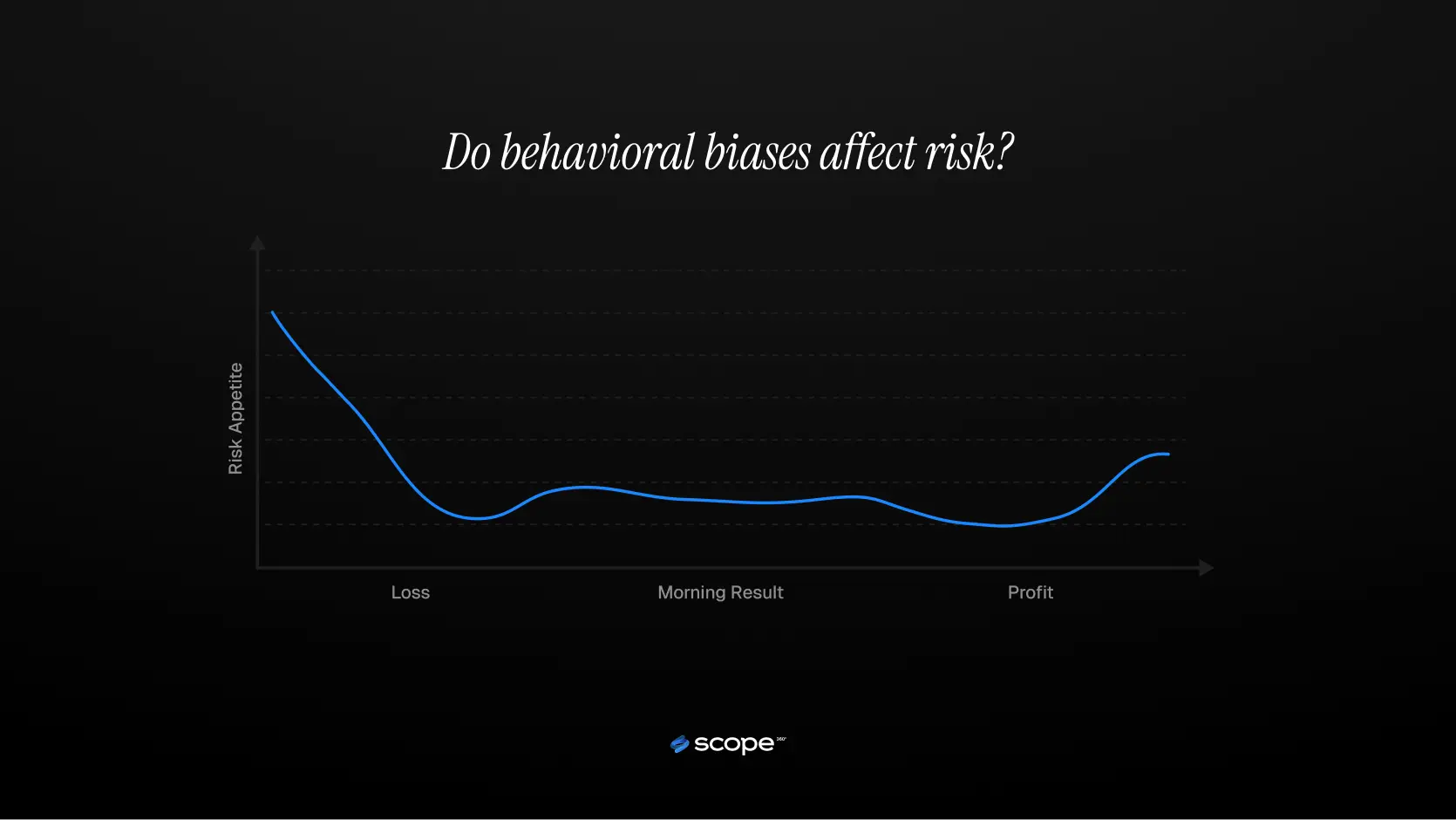
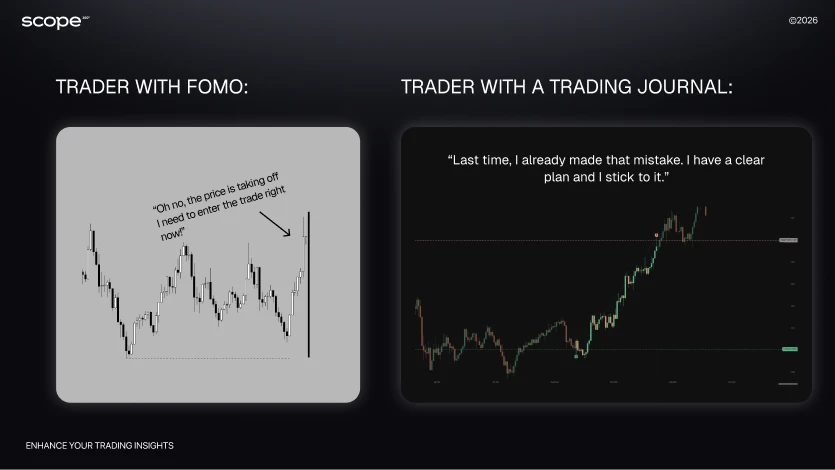
The market has uncanny precision for “hitting where it hurts” - fear of loss, jealousy over others’ profits, craving instant wins, and the urge to ‘get even’ after a string of losses. Classic example: FOMO (fear of missing out) - even the calmest traders rush into positions, not wanting to ‘miss the train,’ often ditching their carefully prepared plans in the process.
Real-world case: Remember the GameStop mania in early 2021? Thousands of both rookies and veterans risked it all to ride the hype. The fear of missing easy profits swept up an entire generation of retail traders - many of whom ended up “holding the bag” near the top, nursing heavy losses. That wasn’t about flawed analysis, but raw crowd psychology in action.
What Happens Internally? The Mechanism of Emotions and Decisions
Once actual money is on the line (especially if it’s money you can’t afford to lose), your ancient brain mechanisms kick in. We’re wired for three things: seek pleasure, avoid pain, and conserve energy. In trading, this often shows up as:
Chasing the thrill - euphoria that tricks you into thinking you’re invincible after a win.
Escaping pain - the urge to ‘just stop the hurting’ by closing out too soon.
Impatience - jumping in or out ‘just to do something,’ afraid the market will leave without you.
“The markets are unforgiving, and emotional trading always results in losses.” - Alexander Elder, The New Trading for a Living
Why Emotional Control Is the #1 Task
No one can entirely turn off their emotions, but you can learn to reinterpret them - as signals for review, chances to pause and reflect, or reminders of your own imperfection.
Peter Lynch, famed fund manager, once said something like that: “In this business, you’re successful if you’re right six times out of ten. Getting nine out of ten is impossible.”
Pros don’t aim for perfection. Their system is designed so inevitable mistakes are just stepping stones - not fatal disasters.
Keeping a Journal: Not Just Recording Numbers, But Understanding Yourself
Around 90% of consistently profitable traders keep not just P&L stats but detailed notes on emotions, the ‘whys’ behind every entry and exit, and even stories of mistakes.
Top proprietary trading firms require monthly debriefs - tough, honest reviews of both trades and emotional slip-ups.
“If you don’t understand market psychology, you’ll quickly be left behind,” goes one hard-won market adage.
Major Failures - All About Psychology, Not Just Bad Trades
Barings Bank, 1995: Nick Leeson hid mounting losses out of fear, and the bank collapsed under the weight of his psychological blind spots, not because of a weak trading system.
Dotcom Bubble: A whole market lost sight of fundamentals, swept away by mass euphoria and the fear of missing out.
Everyday example: The new trader who doubles down after losing trades, chasing losses in a desperate attempt to ‘make it back’ - often digging a hole twice as deep due to lack of discipline and objectivity.
Building Psychological Resilience: The Toolkit of Advanced Traders
1. Emotional Check-ins
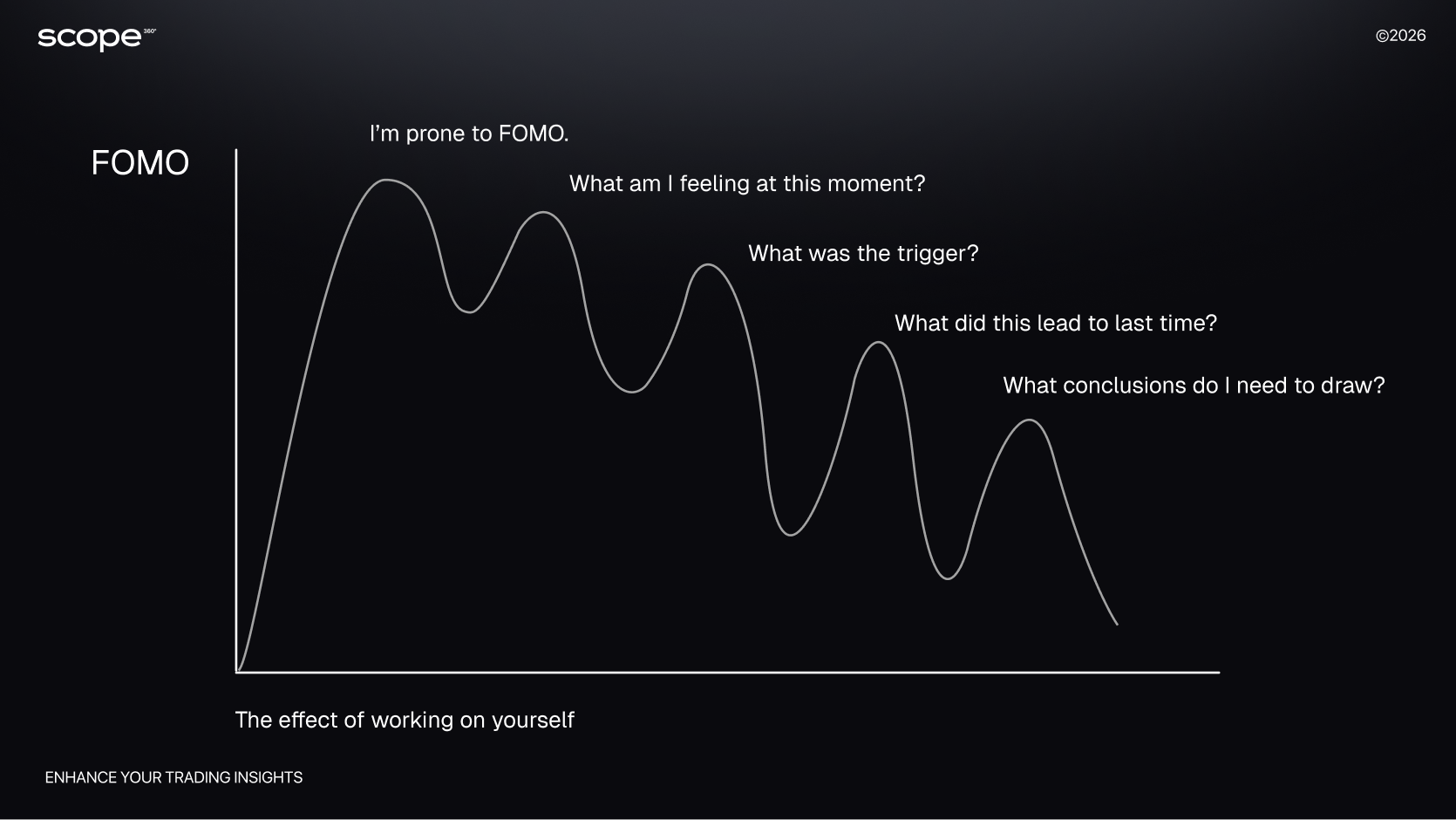
After every trade, ask: why did I enter (or exit)? What did I feel? Many pros explicitly note, “I panicked and bailed early,” “I followed a chat signal and regretted it,” or “went on tilt after a loss and jumped right back in.”
2. Plan Everything, Track Deviations
Have a plan for every scenario and rigorously log every detour - even minor ones. The key is not to punish yourself for mistakes but to analyze them for patterns.
3. The Power of Journaling
Whether in Scope360°, TradingView, or Excel - what matters is recording:
The reason for every trade
Your emotional state
Personal notes: why this instrument, why this size
Weekly and monthly wrap-ups noting patterns and progress
4. Building Automaticity
Emotions never disappear, but habits can minimize their impact. Top traders often repeat: “Wait for your signal, don’t predict the future,”
and recommend always taking a moment to breathe before major trades.
5. Psychological Markers
Record things like: “today was FOMO,” “felt euphoria,” or “was cocky and paid for it.” Brutal honesty here is the shortest path to growth.
6. Feedback, Debrief, and Community
Active participation in communities or with a mentor often uncovers blind spots and accelerates learning.
7. Personal Rituals
Anything from breathing exercises or meditation before sessions to visualization techniques - these add a grounding element and reduce impulsivity.
Rationality vs. Emotion: Expert Takes
Nassim Taleb, author of “Antifragile,” argues: “The best market operators aren’t those with the most degrees or even the best algorithms - they’re those who can silence the internal noise, distinguish raw feelings from analysis, and resist wishful thinking.”
Five Deadly Psychological Traps (and Their Cost)
Expecting easy money - the “lottery ticket” mindset that leads straight to blown accounts.
Blindly following others - copy trades without any personal research.
Ignoring your own plan, especially by increasing trade size impulsively.
Chasing losses - ramping up risk after a losing streak.
Skipping your journal - failing to analyze emotional or impulsive decisions.
Practicing What You Preach: Tactical Tips
Debrief weekly, identifying not just what went wrong but which emotions triggered those slip-ups.
Partner with a mentor or trading buddies - this accelerates honest reflection.
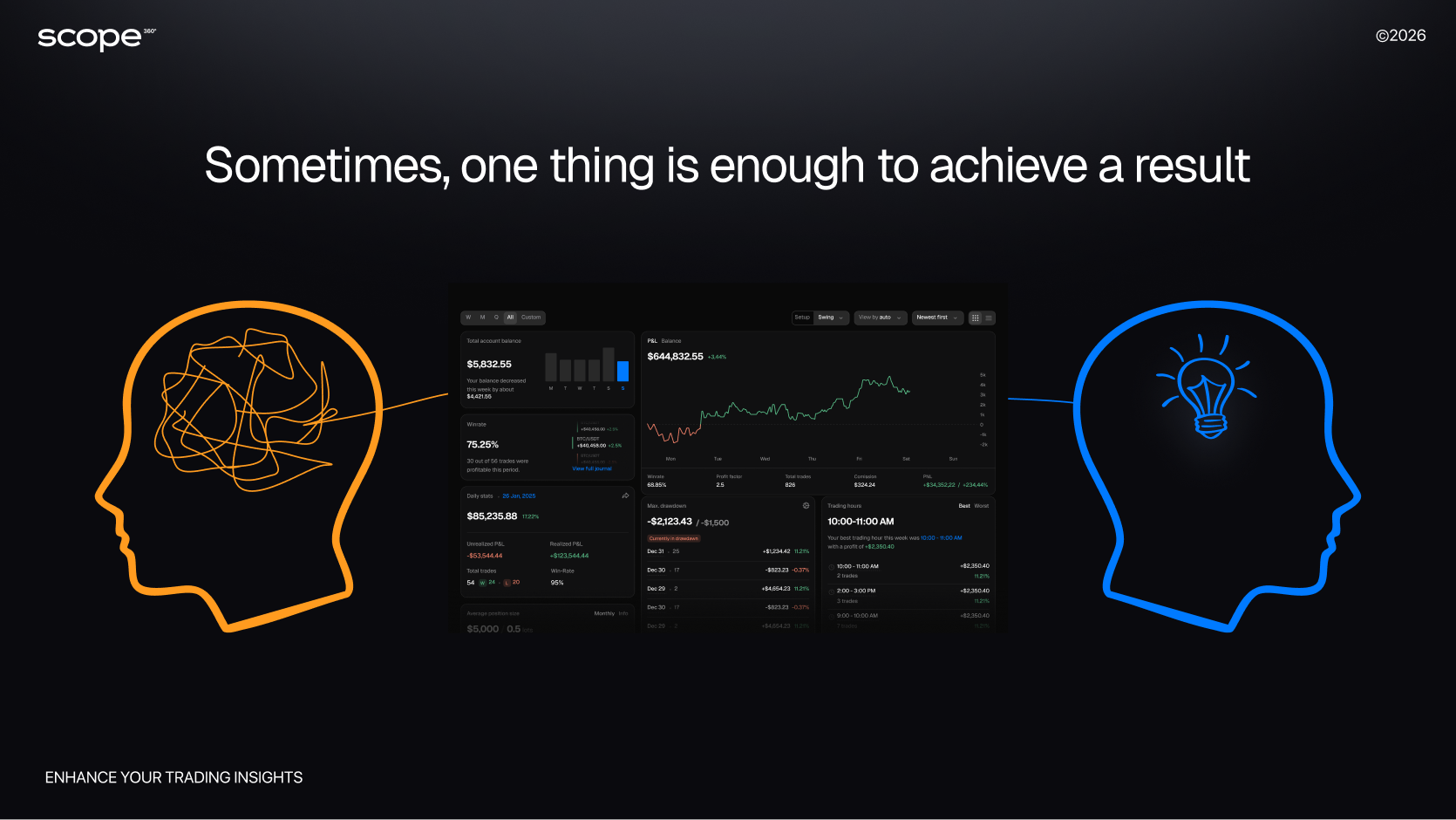
Automate your journaling and analytics with platforms like Scope360°. Lower the barrier to feedback, increase your odds of growth.
By the Numbers
Consistent journaling can reduce annual losses by 30-40%, thanks to less impulsive mishaps and “blind spots” found during review. While discipline alone doesn’t guarantee you’ll become a millionaire, it does guarantee ever-better trading over time.
A Few Last Words: How to Grow Into a Mentally Robust Trader
Trading psychology isn’t just a theory. It’s a hands-on craft - mastered through daily reflection, journaling, analysis, brutal honesty, and plenty of trial and error.
If you consistently work on your emotional triggers, practice patience, refine your rituals, and let your feelings work for you instead of against you, you are building real, sustainable wealth for years to come - not just chasing short-term wins.
Ed Seykota: “Risk no more than you can afford to lose, but also enough that the win will be meaningful.”
Trading psychology is a blend of discipline and art, a years-long journey. It is reserved for those not afraid to challenge themselves, who know that markets are ruthless to those who ignore their own psychology. But for those who work on themselves, one step at a time, the reward isn’t just profit - it’s true trading freedom and lasting success.
This article brings you tactics and wisdom from the world’s top traders, grounded in fresh research, real-life stories, and the honest language of trading. There are no shortcuts - just proven techniques, genuine data, and practical steps to help you rise above the crowd and thrive for the long run.