You’ve probably wondered what separates consistent traders from those who keep spinning their wheels. It’s not just market knowledge or a set of indicators. The key lies in structured practices that support sound decision-making: from morning preparation and checklists to risk management discipline and post-trade analysis. These habits form the foundation of long-term success.
What Makes a Trader Successful
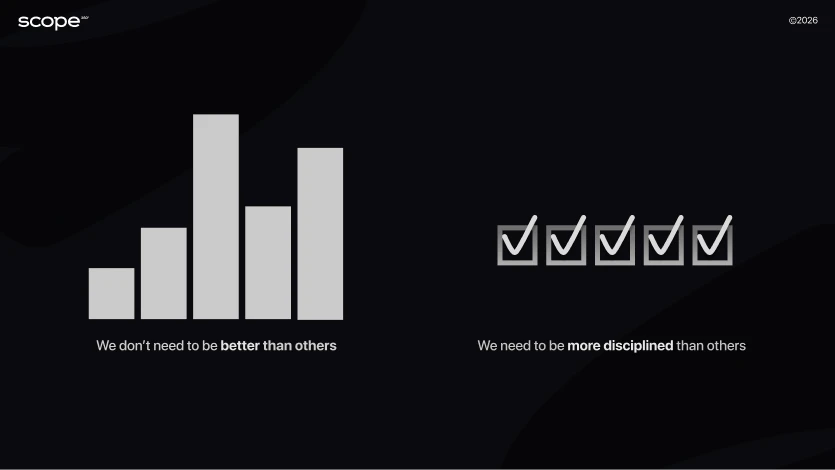
On financial markets, the winner isn’t the one with a “secret indicator,” but the one with stable habits. Successful traders combine two key elements: discipline in psychology and sound risk management. These things don’t depend on a specific market - they work the same in stocks, forex, and crypto.
Mindset and Psychology
A strong mindset starts with keeping emotions under control, especially during periods of high volatility.
Five key qualities that shape a successful trader:
Patience - wait for a confirmed signal, don’t jump into every move.
Acceptance of losses - treat them as part of the system, not as a personal failure.
Focus on the long-term picture - don’t react to every candle; think in trade series.
Error analysis - record them in a journal to avoid repeating them.
Self-awareness - track your emotional triggers and behavioral patterns.
Many successful traders use simple practices - a morning meditation or breathing exercises. This helps start the trading day with a “clear” mind and reduces the likelihood of impulsive decisions.
Risk Management
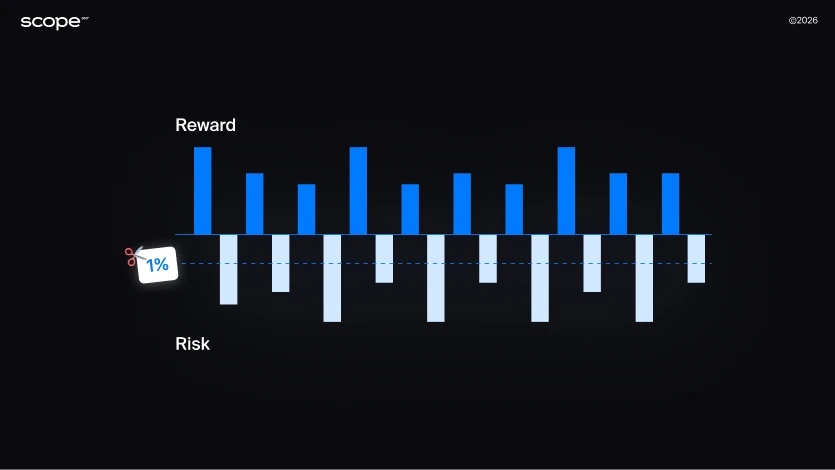
Risk management is the foundation of stable trading. A mistake in risk can destroy even the strongest strategy.
Core rules:
A stop-loss - in every trade, without exceptions.
Position size - no more than 1–2% of the account per trade.
Use position size calculators - don’t risk “by feel.”
Diversify across sectors or instruments.
A backup plan for outages (secondary broker, internet, device).
Example of risk allocation:
Risk Component | Share of Capital |
Risk per trade | 1–2% |
Daily risk limit | 5% |
Sector exposure | up to 20% |
Cash reserve | 30% |
The idea is simple: during heightened volatility, positions should get smaller and control should be tighter.
Trading Routine
The market rewards discipline. A structured routine reduces emotion and increases focus.
Morning prep (30 minutes before the open):
Check news and reports affecting your watchlist.
Look at the economic calendar.
Update stop levels on open trades.
Calculate position sizes for new ideas.
Log your trading plan in the journal.
Top traders keep the workspace tidy: two monitors, a backup internet connection, and a Core Trading Habits
Stable trading is built on consistency. Well-formed daily habits help you make decisions without unnecessary emotions and form the foundation of a profitable strategy.
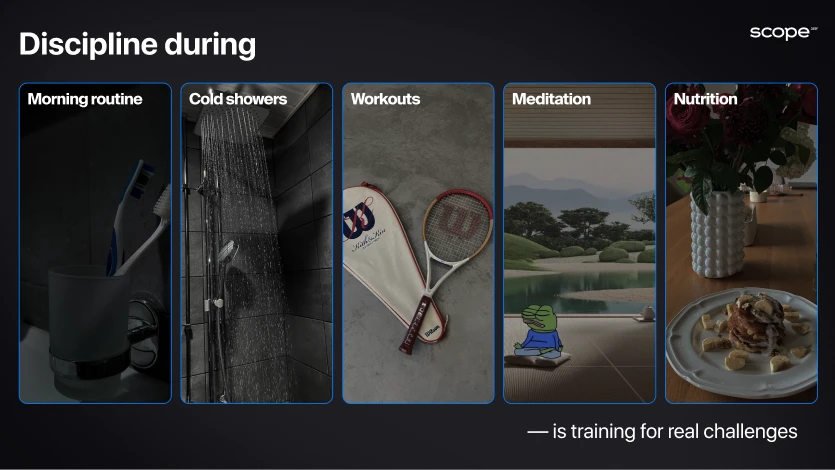
Optimizing Your Trading Routine for Consistency
Morning Preparation: Review market news, the economic calendar, and open positions before trading starts. Note your trading plan and set intended levels for stops and targets. Add a short mindfulness exercise—like breathing or meditation - to reduce impulsiveness and keep focus.
Workspace Organization: Keep your desk clean, monitors arranged, and a pre-market checklist visible. Set up tools for position sizing, risk alerts, and note-taking.
Time Block Structure: Divide your trading day into clear time blocks: analysis, trade execution, regular position reviews, and journaling. Schedule short breaks between blocks to avoid fatigue and overtrading.
Automated Tools: Use position size calculators and trading journals (like Scope360°) to streamline routine tasks and keep your focus on trading decisions rather than paperwork.
Post-Trade Logging: Immediately after closing a trade, record the entry and exit prices, emotions, reasoning, and outcomes. Tag trades by strategy or mistake for easier tracking.
Weekly Review and Self-Analysis: End each week with a review of trade data and journal notes. Look for recurring mistakes or emotional patterns, set goals for improvement, and update your checklist.
Mentorship and Peer Review: When possible, review your process and results with a mentor or trading partner to get outside perspective and stay objective.
Building structured routines around preparation, focused time blocks, automation, and regular review helps develop discipline, increases resilience, and grows your edge as a trader.
Keeping a Trading Journal
A journal is a trader’s working tool. It records all key trade details and helps analyze results.
What to record:
entry and exit prices with timestamps;
position size and % of risk;
market conditions and indicators used;
emotional state during the trade;
post-trade analysis and lessons learned.
!: To keep the data accurate, update the journal right after closing a trade (within 10–15 minutes).
Position Sizing
Position size defines how much of your capital you allocate to a single trade.
Risk Level | % of Account per Trade | Max Daily Risk |
Conservative | 0.5–1% | 2% |
Moderate | 1–2% | 4% |
Aggressive | 2–3% | 6% |
Position size should be adjusted to market conditions: the higher the volatility, the smaller the trade volume.
Stop-Loss Discipline
A stop-loss is not a “fire exit,” but part of the strategy. It must be set before entering a trade and never moved afterward.
Rules:
calculate the absolute risk ($ or % of deposit) before entry;
place stops at technical levels (support/resistance, key moving averages);
use wider stops in highly volatile markets;
add a small buffer beyond obvious stop levels;
review stopped-out trades to improve future placement.
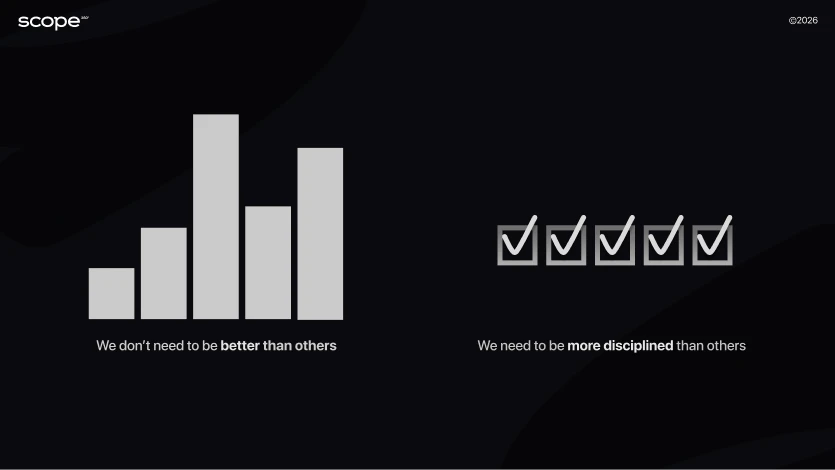
Managing Emotions
Emotions directly impact performance. Controlling them is more important than knowing indicators.
How to handle losses:
treat them as part of the process and a source of experience;
record details of losing trades (conditions, emotions, mistakes);
take at least a 30-minute break after a loss to reset;
review losses weekly to identify recurring patterns.
Every closed trade is data. The key is to analyze it objectively, not emotionally.
Staying Objective
A systematic approach helps reduce emotional influence on trading.
Practices:
write down trade setups before market open;
confirm signals with quantitative indicators;
compare current conditions to historical data;
monitor your emotional states during different phases;
set fixed risk parameters for each session.
Working with a mentor or coach provides external control:
reviewing trades without emotional attachment;
identifying behavioral patterns;
testing strategies through data analysis;
maintaining discipline in position sizing.
Trading Plan
A trading plan is your roadmap. It defines rules and goals for your trading.
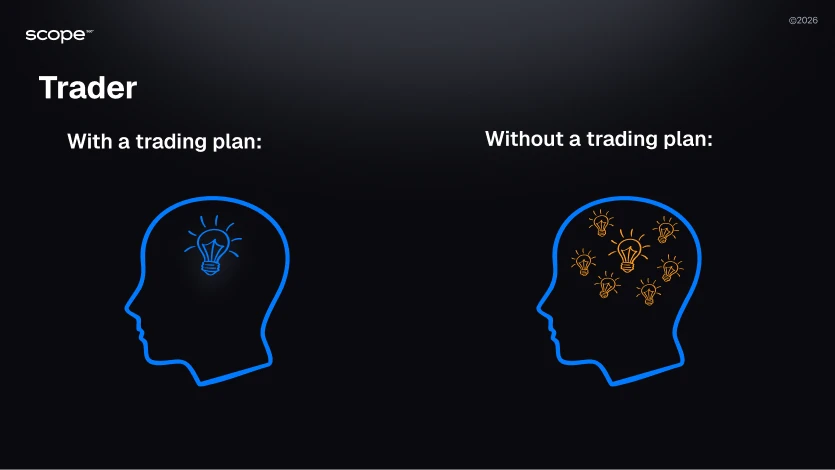
What to include:
profit targets per day/week/month;
maximum allowed drawdown;
realistic return expectations based on strategy;
checkpoints (e.g., quarterly reviews);
skill development goals (learning patterns, indicators).
Performance Metrics
Metrics provide objective evaluation of trading performance.
Metric | Target Range |
Win Rate | 50–65% |
Profit Factor | >1.5 |
Avg. Win/Loss Ratio | >1.5x |
Max Drawdown | <20% |
Risk/Reward Ratio | >1:2 |
Also useful to track:
number of trades per day/week/month;
percentage return on risk per trade;
duration of winning vs. losing trades;
profit distribution across strategies;
impact of fees on net results.
Continuous Learning
Markets change daily, so traders must constantly evolve.
Helpful practices:
read 2–3 trusted sources (Bloomberg, Reuters, Financial Times);
take regular courses and watch training videos;
study historical market cycles;
backtest strategies on historical data;
log all learning activities in your journal.
A good approach is to set quarterly goals: e.g., master 3 new patterns or complete 2 risk management courses.
How Scope360° Helps Build Core Trading Habits
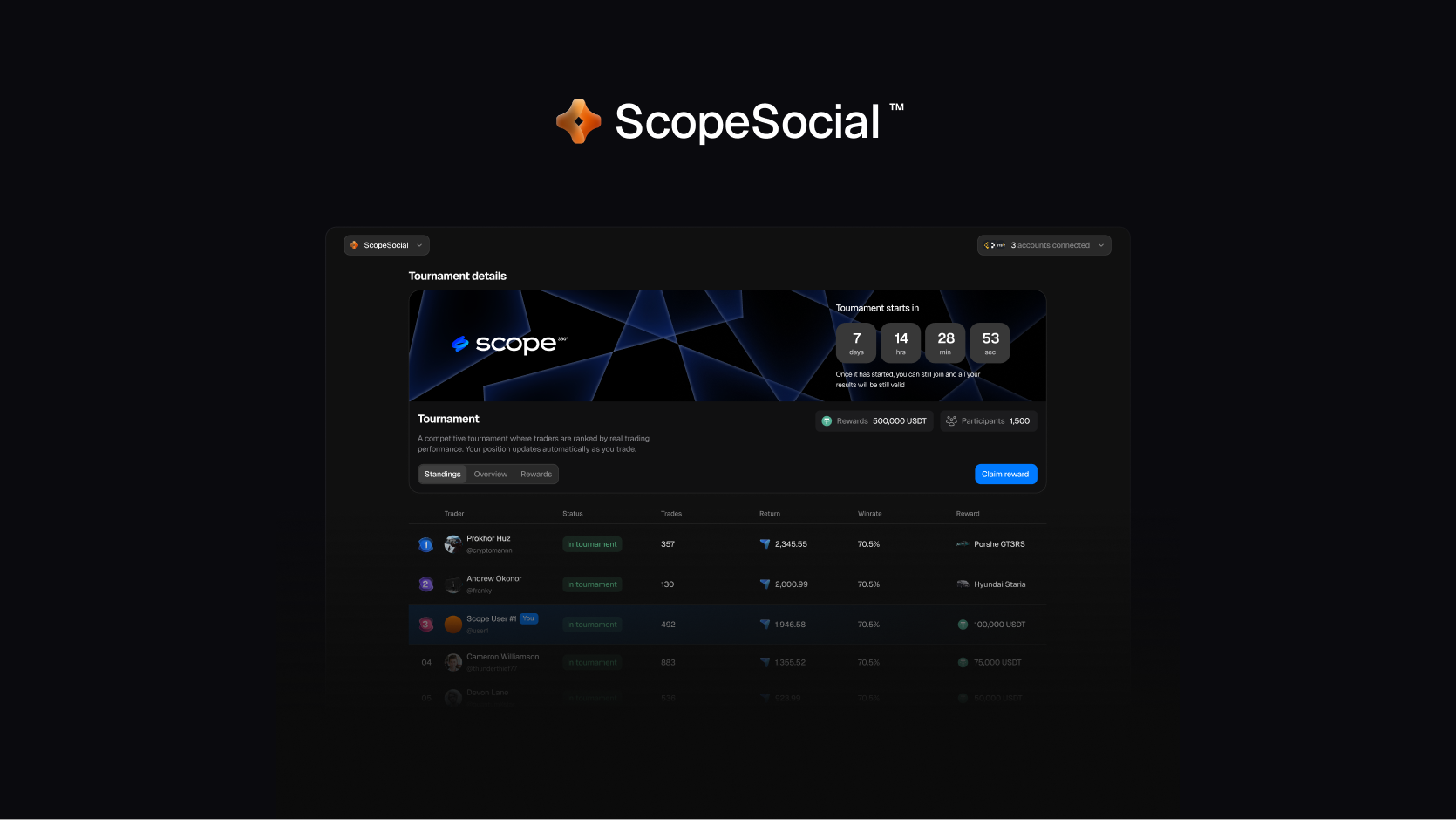
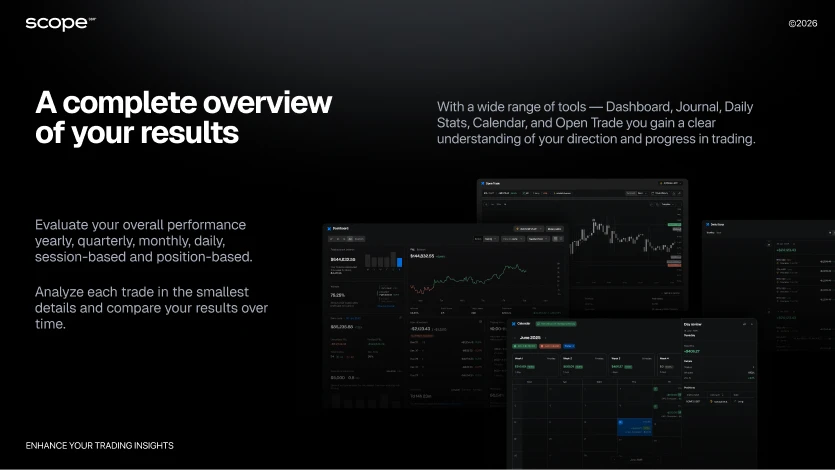
Even if you know the theory, turning it into consistent practice is the hardest part. Scope360° was designed to close this gap: it makes journaling, risk control, and performance tracking part of your routine, not an extra chore.
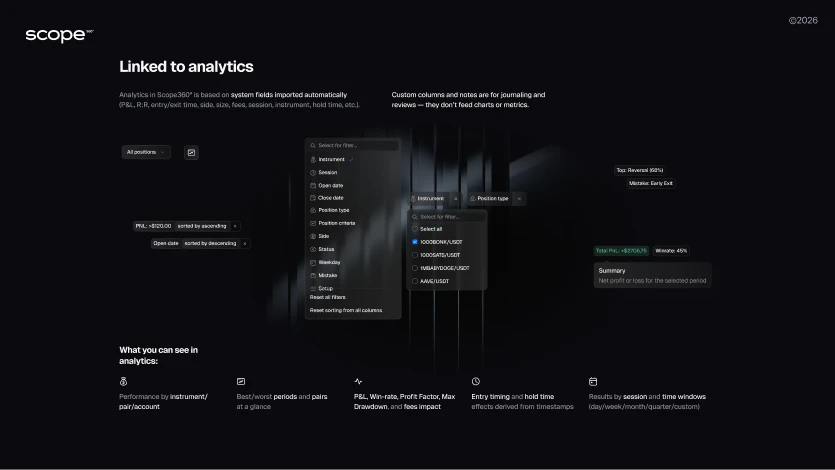
Journaling Made Simple
Automatic trade import - all entries, exits, fees, and swaps are pulled in directly from exchanges or MT4/MT5.
Trade cards - store screenshots, notes, and emotions next to the numbers.
Tags and filters - sort trades by strategy, mistake, or session to spot patterns faster.
Instead of filling spreadsheets manually, your journal is updated automatically. All that’s left is adding your insights.
Position Sizing and Risk Control
Position size tracking - every trade shows how much of your balance you risked.
Built-in Max Drawdown - daily, weekly, and monthly loss limits keep discipline in check.
Portfolios - combine multiple accounts to see your true exposure.
Example of how it looks in Scope360°:
Metric | Tracked Automatically |
Risk per trade |
|
Daily/weekly drawdowns |
|
Position size % |
|
PnL by strategy |
|

Staying Objective
Clear stats - Net PnL, win rate, Profit Factor, R/R, and drawdowns with no cherry-picking.
Comparable setups - measure the same strategy across months or accounts.
Data archive - even if your broker wipes old records, Scope360° keeps everything.
Scope360° removes routine and builds habits into the system. Journaling, risk management, and performance analysis become automatic - so you can focus on decisions, not on paperwork.
Frequently Asked Questions
What are the key elements of a successful trading routine?
A consistent routine is based on:
morning market and news analysis;
checking the economic calendar;
updating stop-losses on open positions;
calculating position sizes for new trades;
documenting the trading plan.
Organizing your workspace and having a daily pre-market checklist is also important.
How much capital can I risk on a single trade?
Most traders limit risk to 1–2% of account balance per trade. This protects capital from large losses and ensures steady growth. The exact percentage depends on your strategy and risk tolerance.
Why is keeping a trading journal important?
A journal records entries and exits, position sizes, trade conditions, emotions, and results. Keeping it regularly helps identify behavioral patterns, improve decision-making, and learn from both winning and losing trades.
How can I manage emotions in trading?
set stop-losses before entering a trade;
take breaks after losses;
review trades objectively, not emotionally;
work with a mentor if necessary.
The main point is to follow your plan, not react impulsively to price moves.
What are the main risk management methods for traders?
placing stop orders;
limiting position size;
using position size calculators;
diversifying trades;
keeping a cash reserve.
It is also recommended to set daily risk limits and adjust trade volume according to current volatility.
How often should I analyze my trading results?
Ideally weekly to track dynamics and monthly to adjust strategy. Monitor win rate, profit factor, and risk/reward ratio. Use dashboards or spreadsheets to compare periods and identify patterns.
What role does continuous learning play in trading success?
A critical one. Markets change, and without updating knowledge, a trader loses effectiveness. Subscribe to financial publications, engage with trading communities, and develop skills in technical analysis, risk management, and trading psychology. Set quarterly learning goals and track progress monthly.
How can I develop a strong trading mindset?
practice patience;
accept losses as part of the process;
keep focus on long-term results;
analyze mistakes and improve your approach;
monitor your emotional state.
Regular meditation and planned analytical sessions can increase clarity and reduce emotional pressure.
Conclusion
Successful trading is not built on luck or a one-time forecast, but on strong habits and discipline. Market knowledge is important, but without a structured approach to decision-making and risk management, it will not turn into results.
Emotional control and consistency of actions are the foundation of long-term profitability. Practices such as morning preparation, keeping a trading journal, and systematic learning build resilience and allow a trader to grow instead of depending on random fluctuations.
Start gradually: implement one habit at a time, track the result, analyze, and move on. Your success is the outcome of disciplined steps you take every day.