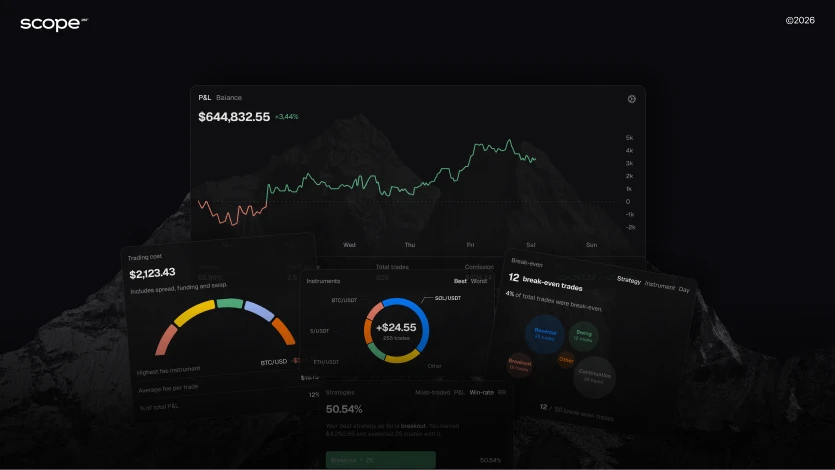
“Professionals learn, amateurs play. The difference is that professionals keep records of their trades and analyze them.” - Alexander Elder, How to Trade and Win on the Stock Market
Why does a trader needs a trading journal: statistics and facts
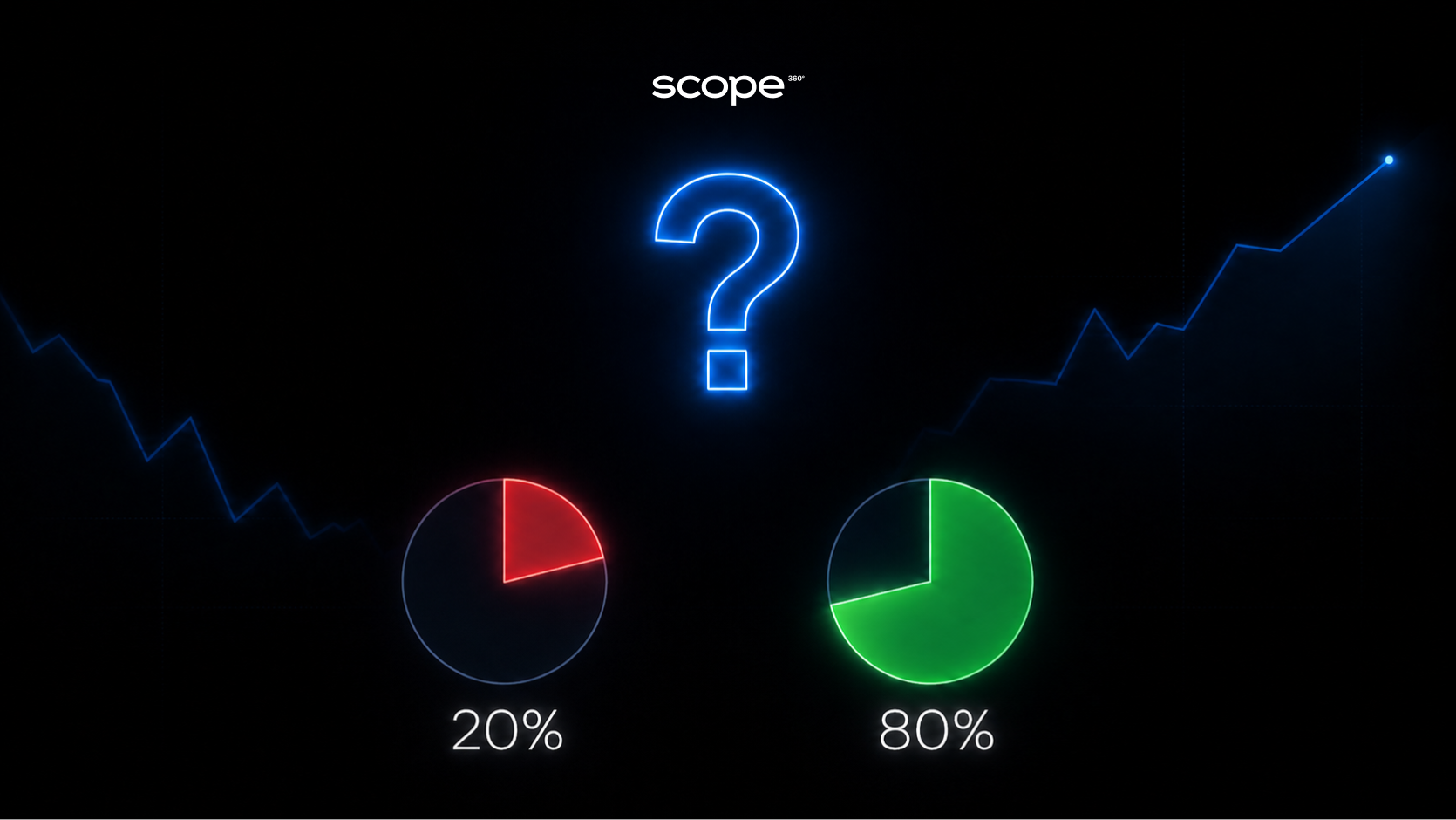
According to statistics, 80% of retail traders end their first year of trading with losses. Among those who remain, only a small portion achieves long-term profitability. At the same time, most unsuccessful traders already possess the basics: they know technical analysis, understand the fundamentals of risk and money management, and recognize the importance of trading psychology.
The key difference between profitable and unprofitable traders is a systematic approach to trade analysis and self-review.
Institutional traders - from hedge funds to banks - log every trade not just for compliance, but because they understand: sustainable profits come from consistently learning from past decisions and adapting to market dynamics. That’s exactly what a professional trading journal is designed for.
Today, trading journal tools and performance analytics are available to everyone. So if the world’s top hedge funds treat detailed documentation as a competitive advantage, why do so many retail traders still treat it as optional? What do the pros know that retail doesn’t?
In this article, we’ll explore five common myths about the trading journal that can seriously hold you back from consistent growth and profitable trading.
5 myths about the trader's journal
Many believe that a trading journal is just a formality meant for beginners. But it's exactly these myths that prevent retail traders from moving toward mindful and profitable trading.
Below, we’ll break down five common misconceptions that keep traders from reaching the next level - and explain why a trading journal has long become a professional tool, not an optional add-on.
Myth #1: A trade journal is just a spreadsheet
"Why would I duplicate information when all the statistics can be viewed on the exchange?"
A professional trading journal is a comprehensive analytical tool that combines quantitative metrics with qualitative analysis of behavioral patterns. Unlike a basic spreadsheet showing trade count, dates, win rate, risk, and RR, a proper journal acts as a bridge between technical analysis and trading psychology, allowing traders to detect hidden patterns that are invisible in surface-level statistics.
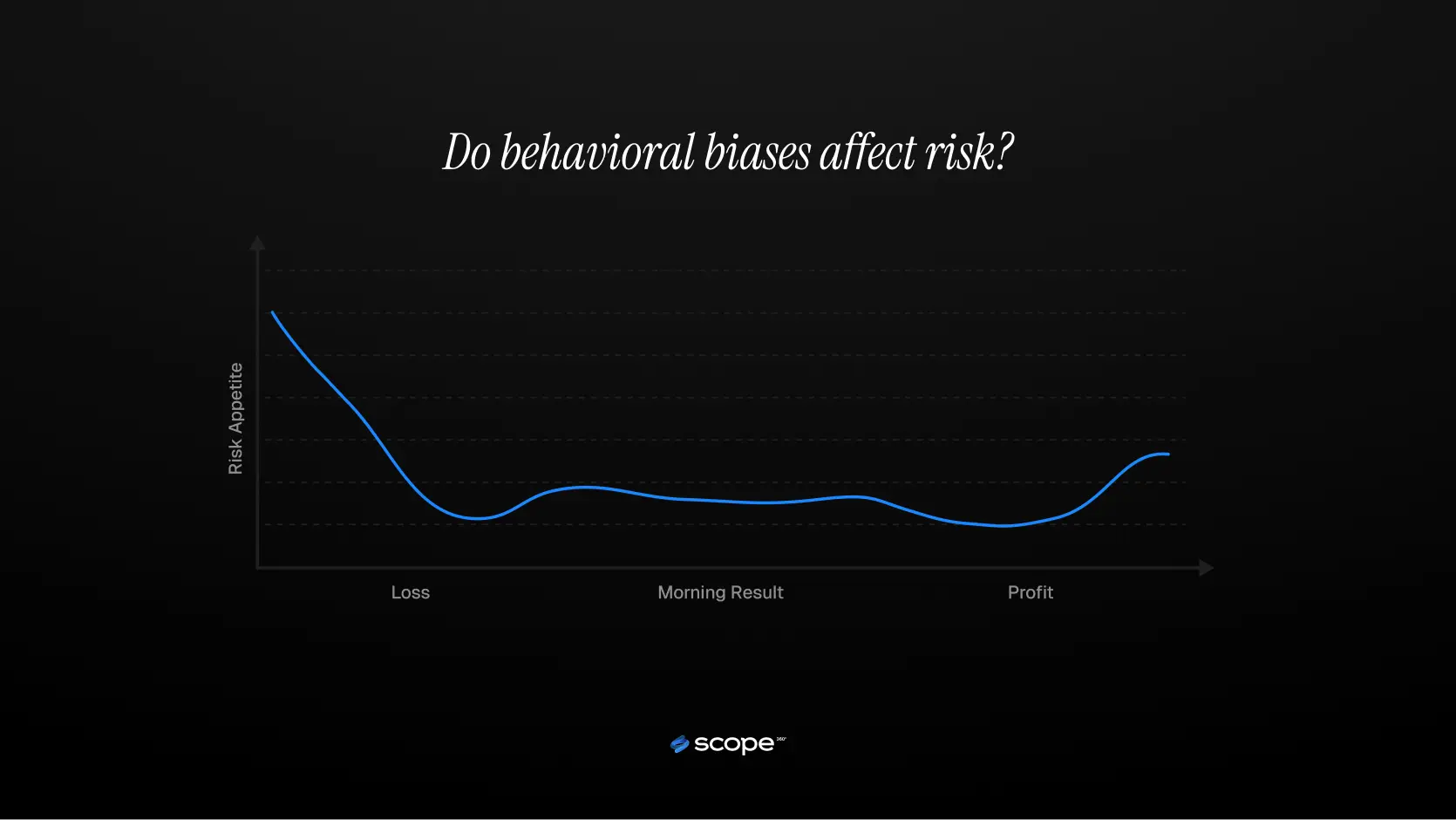
According to observations and several studies in behavioral economics, traders who log not just numbers but also emotions tend to achieve significantly more consistent results. For example, one trader noticed a sharp drop in decision quality after three hours of trading - a textbook case of decision fatigue, described by Daniel Kahneman in Thinking, Fast and Slow.
Van Tharp, in his book Trade Your Way to Financial Freedom, emphasizes that an effective trading journal should go beyond recording trades - it should serve as a tool for self-reflection and performance analysis. He recommends including:
Technical trade parameters (instrument, size, risk, etc.)
Evaluation of strategy alignment and execution quality
Psychological state before and after entry
Market context at the time of the trade
Error analysis and key takeaways
Myth #2: Keeping a journal is only necessary for beginners
Professional traders use a trading journal as a tool for continuous improvement and adaptation to changing market conditions. The paradox is this: the higher the level of expertise, the more detailed and structured the journaling process becomes. Experienced traders understand that markets evolve, new instruments emerge, participant behavior shifts - and strategies must be constantly reassessed.
“What worked yesterday might not work tomorrow.”
This is exactly where a trading journal helps: to notice these shifts and respond in time.
The idea isn't new. Over a century ago, Jesse Livermore - a legendary early 20th-century speculator - already practiced self-monitoring as the core of progress. In Reminiscences of a Stock Operator, he wrote:
“I always remembered what made me buy or sell. I kept the reason in mind and compared it to the result. If I was right - I analyzed why. If I was wrong—even more so.”
As Mark Douglas noted in Trading in the Zone:
“The market doesn’t need to adapt to you. You must adapt to the market. And without discipline and self-observation, that’s impossible.”
This is the essence of trade review: to log, analyze, and, when necessary, adjust. Because in trading - just like in life - success doesn’t belong to the one who knows everything, but to the one who can adapt at the right moment.
Myth #3: It is enough to analyze only profitable trades
Losing trades contain critically important information about systematic errors and psychological distortions that can cost a trader significant capital in the long run. Every loss is a lesson already paid for — and ignoring its analysis is equivalent to throwing money away.
Moreover, losing trades often serve as indicators of deeper structural issues: violations of risk management, psychological triggers, analytical mistakes, or strategy misalignment with current market conditions. It’s through the analysis of failures that traders build a foundation to eliminate repeating mistakes and develop more resilient trading systems.
“Losses trigger stronger emotions than gains of the same size. This asymmetry is a fundamental trait of human decision-making.” — Daniel Kahneman, Thinking, Fast and Slow
Research in behavioral economics shows that the psychological pain from a loss is felt 2 to 2.5 times more intensely than the joy from an equivalent gain. This phenomenon, known as loss aversion, was described by Daniel Kahneman and Amos Tversky in prospect theory.
For traders, this means: losing trades carry the richest data about individual behavioral patterns. Losses tend to provoke impulsive actions, deviations from the system, and a breakdown of mental discipline. But once these reactions are logged and analyzed, they become a point of growth.
Paradoxically, it’s mistakes that shape professional thinking - if the trader chooses to confront and deconstruct them systematically. And this is where the trading journal becomes the bridge between emotional reaction and self-awareness.
Structured Loss Analysis
A professional approach to analyzing losing trades includes:
Error categorization: technical (incorrect analysis), psychological (plan violation), systemic (strategy flaws)
Quantitative assessment: size of the loss relative to average trade risk, the “cost” of the mistake
Trigger identification: what exactly led to the breakdown of the trading plan
Countermeasure development: specific actions to prevent the recurrence of the same mistake
Myth #4: The main value of a magazine lies in the numbers
Qualitative indicators and behavioral patterns often provide more valuable insights for improving trading performance than traditional quantitative metrics. Numbers can tell us what happened, but only qualitative analysis explains why it happened and how to avoid or repeat it.
For example, a 60% win rate may hide the fact that all losses occur on specific days of the week or at certain times of day. A profit factor of 1.5 won’t reveal that the trader is consistently breaking their own rules.
As Nassim Taleb noted in Fooled by Randomness:
“Statistics can tell us what happened, but rarely explain why it happened — and even more rarely how to prevent it from happening again.”
This is why leading hedge funds and prop trading firms increasingly focus on behavioral analytics — the analysis of psychological and behavioral patterns that ultimately drive long-term trading success.
Key behavioral performance metrics include:
Consistency score — stability of results over time
Risk adherence — compliance with risk limits and trading discipline
Stress performance — behavior under high volatility conditions
Learning curve — speed of adapting to new tools and environments
Myth #5: Keeping a trade journal requires a significant time commitment
Modern technological solutions make it possible to automate a large part of the trading journal filling process, and the time spent on analysis pays off many times over through improved trading results.
In the era of digitalization of financial markets, maintaining a journal has transformed from a routine task into a high-tech process of data analysis.
API integration with exchanges and brokerage platforms, automatic trade import, report generation, and pattern recognition — all of this turns the journal into a unified analytical system.
Today’s trader spends no more time on journal entries than checking their email — yet receives a tool capable of identifying hidden patterns and preventing costly mistakes.
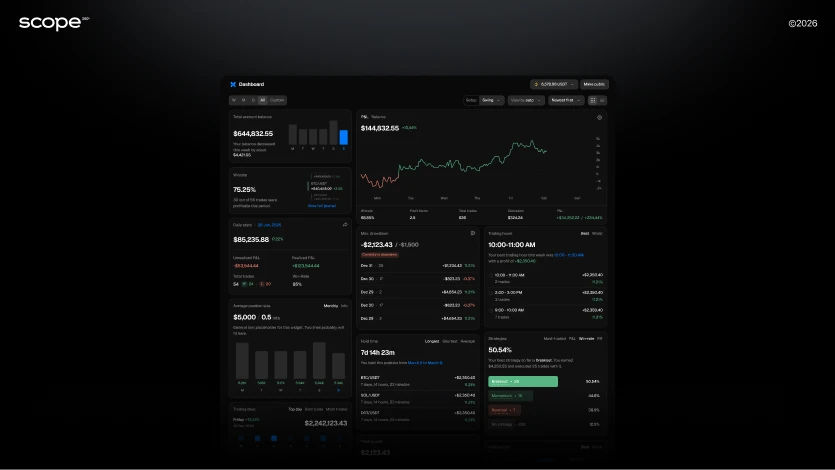
Modern automation solutions - Scope360°
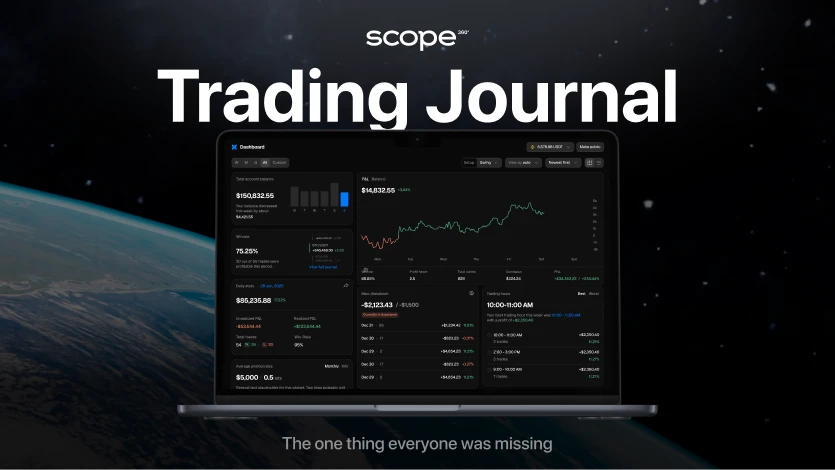
There are many professional platforms for maintaining a trading journal, and Scope360° is one such example. It is an automated trading journal that integrates with exchanges and brokerage accounts, automatically importing all essential data and then visualizing it through dedicated performance metrics.
The trader only needs to add qualitative inputs - the reasoning behind the trade, emotional state, and alignment with the trading strategy.
A simple example of how Scope360° saves traders time:
Manually logging a single trade in standard apps takes an average of about five minutes. In Scope360°, trades are automatically transferred into the trading journal. The trader only needs to add setup notes, key criteria, errors, and psychological observations — all of which takes less than a minute.
Now imagine: you made 8 trades in a month. That’s 32 minutes saved on just 8 trades - thanks to Scope360.
And how much is that in dollars?
Here’s a real example: a trader spent 40 minutes reviewing their monthly trading results and discovered that weekend trades were consistently unprofitable — 80% of them ended in losses due to low volatility and higher risk of manipulation.
By removing weekends from their trading schedule, they saved $2,000 the following month. Which breaks down to: $2,000 / 8 days = $250 per day.
Significant, isn’t it?
Conclusion
The evolution of the trading journal - from simple trade logging to a comprehensive analytical tool - reflects a broader shift in modern financial markets toward data-driven decision-making.
Institutional traders have long understood that sustainable competitive advantage doesn’t come from isolated winning trades, but from the systematic refinement of decision-making processes.
“In the long run, the market is a weighing machine; in the short run, it’s a voting machine reflecting people’s emotions.” — Benjamin Graham
A trading journal helps us become more objective and less emotional — which is essential for achieving consistent profitability in today’s landscape of high-frequency trading and algorithmic competition.
Practical task: Review your last 20 trades and answer the following questions:
What percentage of trades were executed in full alignment with your trading plan?
Which external factors most frequently affect the quality of your decisions?
At what time of day are your results most consistent?
If you struggle to answer these questions with precision — that’s a clear signal that you may need a more advanced trading journal like Scope360°.