Let’s be honest: Day trading is the hardest way to make "easy money." The internet is full of influencers promising Ferraris and overnight millions. The reality is much colder.
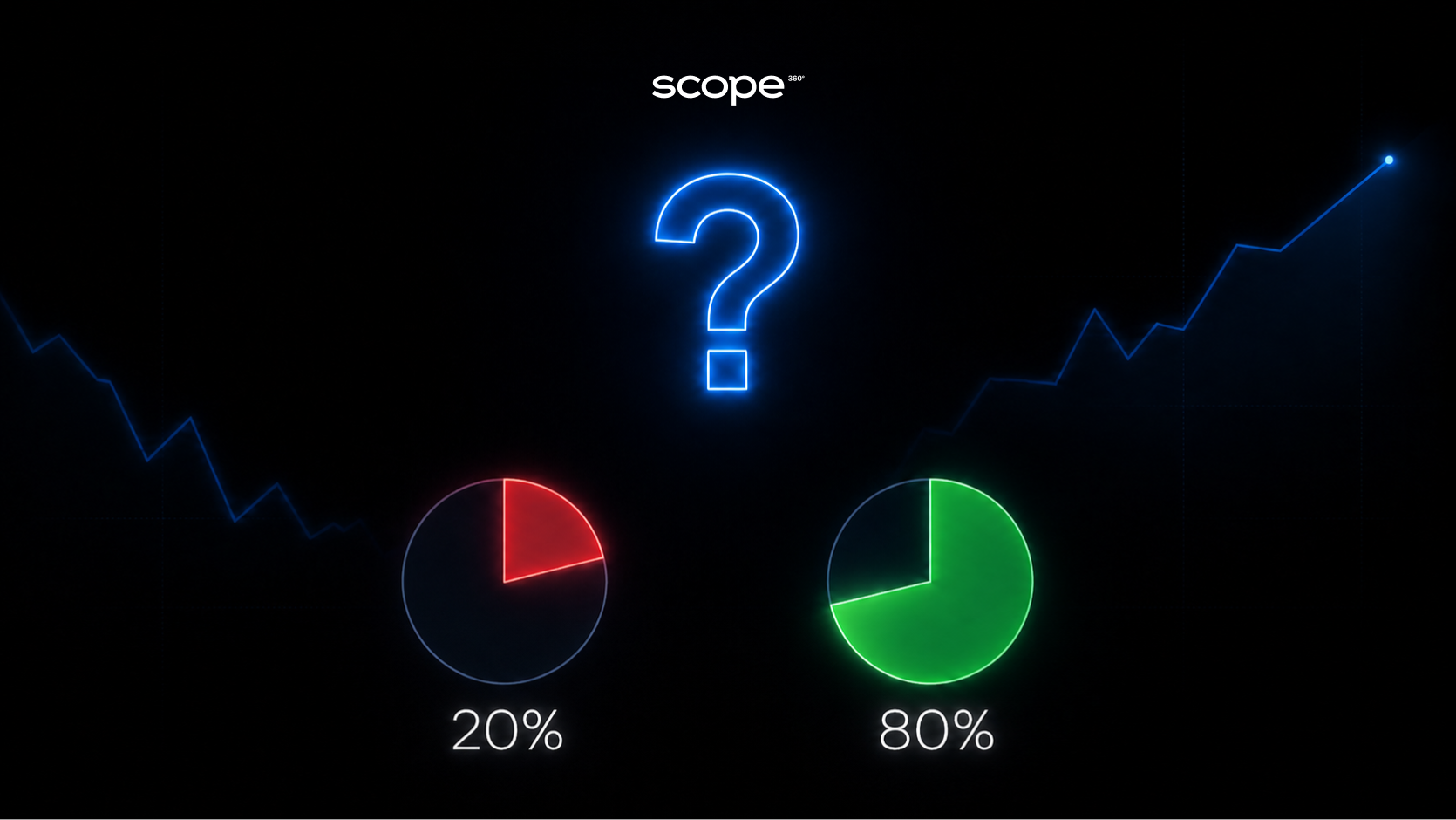
Statistics show that over 90% of beginner traders lose their entire capital within the first 6 months. They don't fail because they are stupid; they fail because they bring a knife to a gunfight.
In 2026, you are not just trading against other people. You are trading against institutional algorithms, high-frequency bots, and artificial intelligence.
If you are looking for a lottery ticket, close this page now.
But if you are ready to treat trading as a serious business - requires discipline, data analysis, and grit - then you are in the right place. This guide will not sell you a dream. It will give you the blueprint to survive the learning curve and join the top 10% of traders who actually make money.
Step 1: Secure Your Capital and Hardware
Before you look at a chart, you need the right setup. A common myth is that you need six monitors and $50,000 to start. This is false.
Hardware Requirements
You need reliability, not flashiness.
Laptop/PC: Any modern computer with at least 16GB RAM (charting software can be heavy).
Internet: A stable fiber connection. Lag can cost you money.
Monitor: One external monitor is recommended, but not mandatory.
Capital Requirements
How much money do you need? It depends on the market.
Market | Minimum Capital (Recommended) | Why? |
Crypto Futures | $500 - $1,000 | High volatility and leverage allow for growth with small accounts. |
Forex | $1,000 - $2,000 | Leverage is high, but you need buffer for drawdowns. |
Stocks (USA) | $25,000+ | The "Pattern Day Trader" (PDT) rule requires $25k minimum balance. |
Risk Rule: Only trade with "Risk Capital" - money you can afford to lose 100% of without affecting your lifestyle. If you trade with rent money, emotional stress will guarantee you lose.
Step 2: Build Your Knowledge Base
You wouldn't try to fly a plane without flight school. Don't trade without education. In 2026, information is free, but structured knowledge is rare. Focus on these three pillars:
Technical Analysis: Learn to read the language of the market (Candlesticks, Support/Resistance). [Read our Guide on Technical Analysis Basics].
Risk Management: This is how you survive. Learn position sizing and Stop-Loss placement.
Trading Psychology: Understanding fear, greed, and FOMO.
Step 3: Choose the Right Exchange or Broker
Your broker is your business partner. If they have high fees or poor execution, your business will fail.
Key factors to check:
Fees: Look for low "Maker/Taker" fees. In high-frequency day trading, fees can eat 20-30% of your profit.
Liquidity: Can you buy and sell instantly without moving the price?
Interface: Is the platform fast and easy to use?
Asset Class: Do they offer the pairs you want to trade (e.g., Bitcoin, Gold, NVDA)?
Step 4: The "Simulator" Phase (Paper Trading)
Before risking a single dollar, you must prove you can be profitable with virtual money. This is called Paper Trading. Most exchanges (like Binance, Bybit) offer a Demo mode.
The 2-Week Rule: Do not deposit real money until you have been profitable on a Demo account for two consecutive weeks. Treat the demo account as if it were real. If you lose virtual money, analyze why.
Step 5: Start Small (The "Tuition" Phase)
Once you pass the 2-week demo rule, it is time to fund your account. But be warned: Trading with real money feels completely different. When real capital is at risk, your heart rate goes up. Fear and Greed kick in. This is why you must start small.
Deposit only what you can lose. Start with $100 - $500.
Micro-Positions: Trade the smallest possible size (e.g., 0.01 BTC or 1 lot).
Goal: Your goal for the first 3 months is not to get rich. It is not to blow up.
Think of your early losses not as "losses," but as market tuition fees. You are paying the market to teach you how to trade.
Step 6: Automate Your Analytics (Crucial Step)
This is the step that separates the 90% of losers from the 10% of winners. Novice traders only look at their PnL (Profit and Loss). Professionals look at their Data.
You cannot improve what you do not measure. In the past, traders spent hours manually typing data into Excel spreadsheets. In 2026, this is obsolete.
Use Scope360.io to Automate Your Journaling Instead of manual entry, connect your exchange API to Scope360. It works in the background, analyzing every trade you make.
Key Metrics Scope360 Will Show You:
Win Rate: How often are you right? (e.g., 45% or 60%?)
Profit Factor: Are your wins bigger than your losses? (A Profit Factor > 1.5 is the goal).
Time Analysis: Do you lose money when trading in the evening? Or on weekends?
Emotional Tags: You can tag trades as "FOMO" or "Revenge Trade" to see how much your emotions are costing you.
The Reality: A trader without a journal is just a gambler. A trader with an automated journal is a CEO analyzing their business performance.
Conclusion: Your Journey Starts Now
Starting day trading in 2026 is an exciting journey. You have access to professional tools, instant execution, and global markets.
However, the market does not care about your feelings. It only rewards discipline and consistency.
Your Action Plan:
Set up your hardware.
Learn the basics (Technical Analysis & Mechanics).
Practice on Demo until you are profitable.
Start live with small size.
Connect to Scope360 immediately to track every mistake and victory.
Don't be the trader who guesses. Be the trader who knows.
Ready to launch? Create your free Scope360 account and start building your trading career on solid data today.
Disclaimer: The information provided in this article and on Scope360.io is for educational and informational purposes only and does not constitute financial, investment, or trading advice.