During trading we act in real time: reacting to price, watching charts, managing positions. This is not the moment for deep analysis - just as a fighter does not think about every punch in the middle of a fight. Real improvement happens later, when there is an opportunity to calmly review what worked and what didn’t.
Trading requires the same attitude: to respect the results and approach them with the same seriousness that athletes and performers use when analyzing their performances. What’s at stake is not abstract points, but real money.
The key to progress is simple: a systematic trade review process. It allows you to identify mistakes, spot recurring patterns, and refine your strategy. Errors are rarely visible in the moment, and a complete picture never forms from a single trade.
In this article we’ll break down how to build a trade review process and why it is essential for every trader.
Why a Trade Review Process is Needed
Trading is often associated with instant decisions: pressing the “buy” or “sell” button here and now. But it’s exactly this “here and now” that most often hinders objectivity. While you are inside a trade, perception is distorted by emotions - fear of missing profit or the urge to win back losses.
A trade review is needed to separate the process of trading from the process of analysis.
During the trade we act according to the plan and manage the position.
After the trade we analyze what was done right and where mistakes were made.
This is not a formality, but a key tool of professional growth. Just as an athlete after training or a fight reviews the recording, a trader must “re-watch” their trades: look for patterns, adjust strategy, strengthen discipline.
Without a systematic review process, trading turns into a sequence of random actions where mistakes repeat again and again.
Managing Trading Data
One of the main challenges for a trader is not just making trades, but properly working with their history. Raw data by itself doesn’t provide much: what matters is formatting, ease of analysis, and the ability to see the full picture.
In the past, traders had to manually keep Excel spreadsheets or look for third-party services to import trades. Today the market has moved forward, and traders have modern tools.
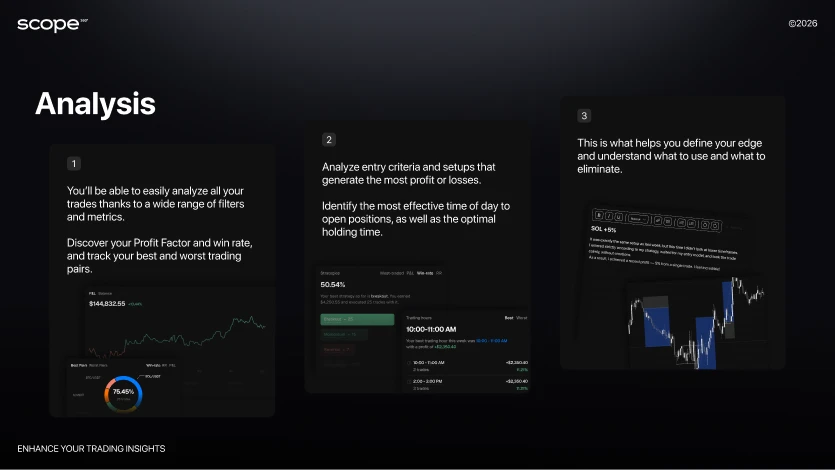
One of these solutions is Scope360°.In 2026, it is one of the few services that combines:
automatic trade import from exchanges and terminals (MT4/MT5);
clean formatting of statistics without manual work;
saving the complete trading history, even if a broker or platform clears old records;
ready dashboards with key metrics (PnL, win rate, drawdowns, Profit Factor).
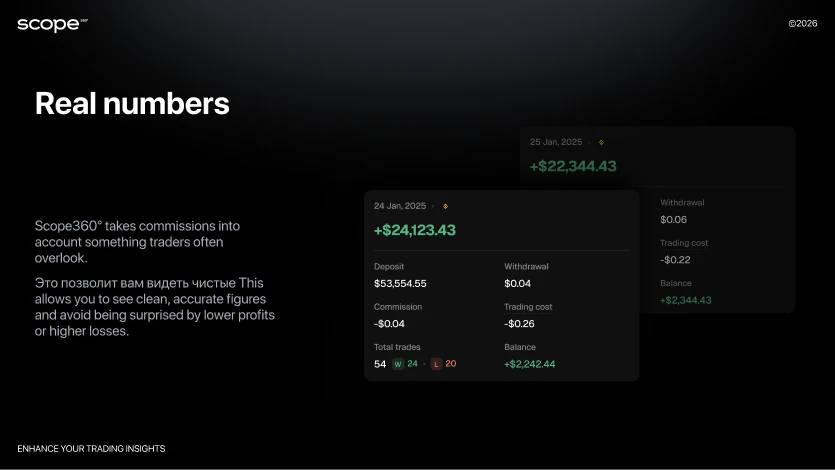
Scope360° removes routine and turns data management into a working process built into the system. Instead of copying rows and formulas, a trader gets live analytics where mistakes and patterns are immediately visible.
Reviewing the Big Picture (Macro Level)
When your trading history is organized, the next step is to see the picture as a whole. Macro-level analysis helps you understand where your trading is heading overall, without getting stuck on individual trades.
There are several key metrics that help objectively evaluate performance:
Profit Factor - the ratio of total profits to total losses. A value above 1 indicates positive efficiency, above 2 means a sustainable system.
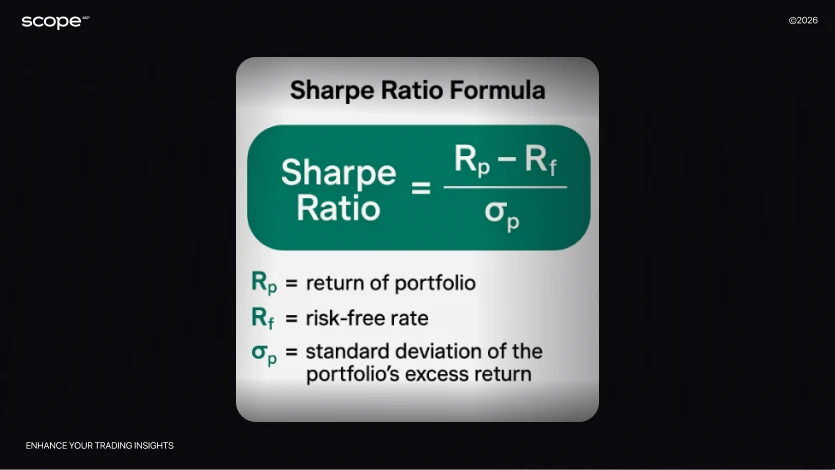
Sharpe Ratio - shows how much return you get per unit of risk. The higher the ratio, the more effective the strategy.
Equity Curve - a chart of balance changes over time. It clearly reflects the trend: whether there is growth, how smooth the dynamics are, and how drawdowns are handled.
It’s important not to focus only on win rate. A high win rate can hide a strategy with rare but large losses. That’s why macro analysis is needed to see not only the frequency of wins but also the stability of the whole system.
Reviewing Individual Trades (Micro Level)
If macro analysis answers the question “how does the strategy work overall,” micro review shows how well you executed it in specific trades. Honesty is crucial here: the goal is not to justify the result, but to understand where you deviated from the rules or lost focus.
It’s useful to use a checklist when reviewing each trade:
What setup was I trading?
What were the goals for this trade?
Did my actions match the market context at that moment?
Did I follow my entry and exit rules?
Would I take the same trade if I didn’t know the outcome?
Were there warning signals I ignored?
Did I follow my scaling rules for position size?
It’s important to fight hindsight bias. It’s easy to say “I should have exited earlier” once you see the full chart. But the real value of review is in reconstructing your thought process at the time of the trade.
Scope360° helps simplify this process: in the trade card you can save screenshots, record thoughts and emotions, and later compare them with the results. This makes trade review not just dry statistics, but a tool for developing discipline and improving execution quality.
Turning Review into a Habit
Trade analysis is not an optional add-on, but part of trading itself. Without regular review, a trader risks repeating the same mistakes and misjudging the effectiveness of their strategy.
Why it matters
Most strategies can roughly be divided into two types:
short volatility - frequent small wins and rare large losses;
long volatility - frequent small losses and rare large gains.
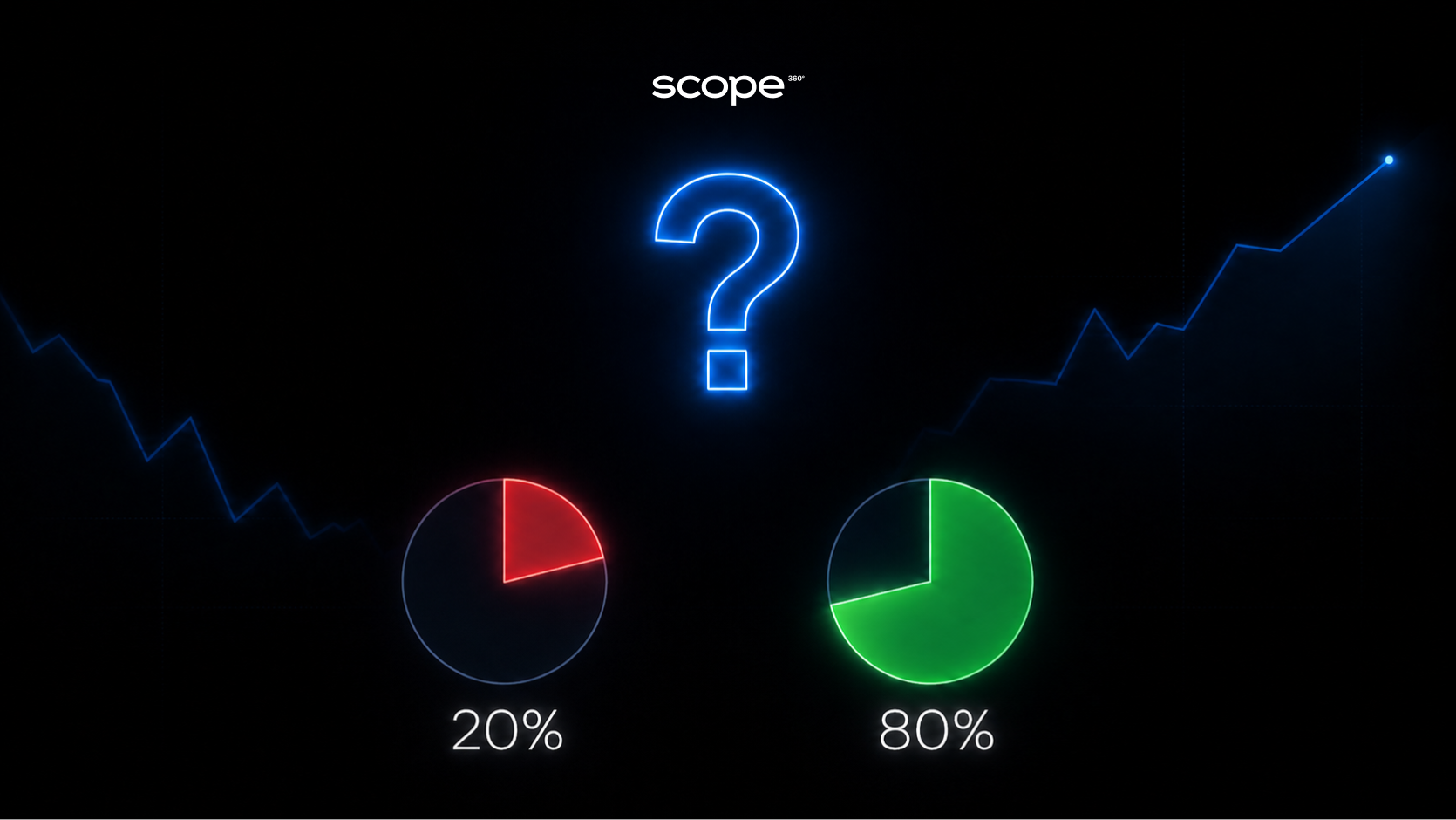
If you don’t understand which type your approach belongs to, it’s easy to fall into illusions. For example, a high win rate of 75% may look like proof of success - but a single strong move against you can wipe out months of profits.
Review helps you see the “shape” of your equity curve: should it be smoother or consist of jumps; how deep the drawdowns are; how well the strategy recovers from losing phases.
What to track in regular analysis
Profit Factor. A value >1 indicates efficiency, but it’s important to monitor it dynamically, e.g., over the last 50 trades.
Sharpe Ratio. Shows how justified your risk is for the returns you get. A strategy with lower profits but a high Sharpe may objectively be better than an aggressive approach with low “return per unit of risk.”
Long-term trend. Moving averages or trendlines on the equity curve will show whether you have sustainable growth or are effectively “moving sideways.”
Frequency of review
Day traders benefit from weekly reviews.
Swing traders - monthly.
All traders should do a quarterly “big picture” review to see the strategy’s performance over the long term.
How Scope360° helps
Scope360° turns review into a process built into the system:
imports trades automatically;
calculates Profit Factor, Sharpe Ratio, and drawdowns;
visualizes the equity curve and its dynamics;
allows you to analyze individual trades together with market context, emotions, and screenshots.
As a result, review stops being a chore and becomes a habit that shapes a professional trader. This process is what separates those who merely “survive in the market” from those who grow systematically and preserve capital over the long run.

Conclusion
By this point, you should have a clear understanding of how your trading process works and where you are in your development.
Regular trade review is not optional and not a “check-the-box” exercise. It’s a systematic tool that allows you to objectively evaluate your actions, spot mistakes, and turn them into growth points.
For day traders, a weekly review ritual works best. For swing traders, monthly reviews are more effective. The key is making it a habit. Without this practice, you risk going in circles - repeating the same mistakes and gradually watching your results deteriorate.
Review should not be treated as an obligation or homework assignment. Its real value lies elsewhere - it helps you maintain clarity, discipline, and resilience, all of which are essential for long-term profitability.
Scope360° makes this process easier: it automates the routine, leaving traders with the most important task - analyzing and making decisions.
In the end, the habit of regularly reviewing your trades becomes the foundation of professional trading - the factor that separates those who merely survive from those who grow consistently.