More and more traders today are not trading with their own capital, but with funds provided by companies - turning it into a full-time career. This isn’t just a trend; it’s a full ecosystem with strict rules, tough evaluations, and high expectations.
Wanting it isn’t enough. Traders must be systematic, disciplined, and able to prove their reliability - not with emotions, but with data. It’s not just about having a strategy, but about showing how well you follow it.
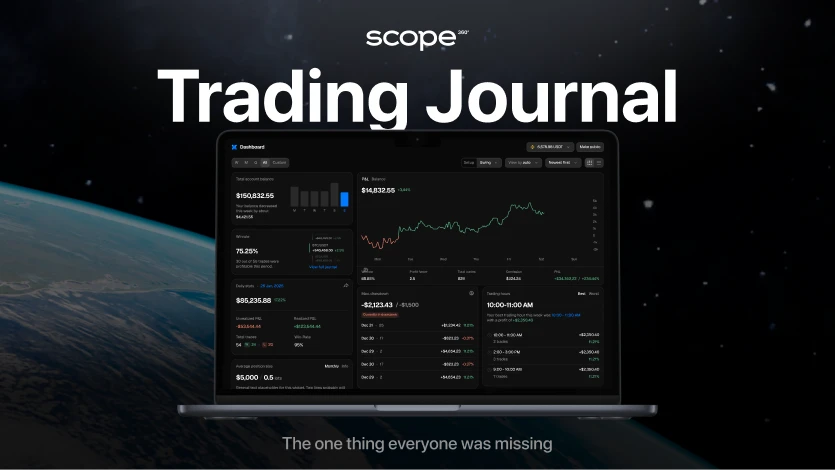
That’s why a trading journal becomes a key tool. It shows how you trade, how you manage risk, and whether you’re truly ready to work with serious capital.
Scope360° is built for exactly that. In this article, we’ll cover how to prepare for prop firm challenges, why a journal matters - and why skipping it can cost you the opportunity.
What is a prop firm and how does it work?
A Prop Firm (short for "proprietary trading firm") is a company that provides traders with access to its capital to trade in financial markets. Instead of risking your own money, you trade using the firm's funds. Your job is to trade profitably while following the risk management rules set by the company.
Simply put, it's like being trusted to manage someone else's account. If you do well, you earn a percentage of the profits. If you break the rules, you lose access to the account.
How it works:
Challenge (Evaluation Phase): To access a prop firm’s capital, you must pass an evaluation. Usually, this is a demo phase where you trade under their conditions - for example, you can’t exceed a daily loss limit, you must reach a specific profit target, and you need to trade for a minimum number of days.
Funded Account: After successfully passing the evaluation phase, you get a funded account - usually ranging from $10,000 to $200,000 (in a simulated format with real outcomes). All trades are placed with virtual funds, but the profit payouts are real.
Profit Split: Typically, you receive 70% to 90% of the profits you generate on the account. The rest goes to the firm for providing capital and infrastructure.
Rules and Risks: Prop firms closely monitor compliance with their rules. Violations (such as breaching the loss limit) can result in the account being revoked. That’s why discipline and transparency are critical in this environment.
It is important to note that the opportunity to take the challenge is not free. The price of an attempt depends on the size of the account. For example, the smallest account of $5,000 will cost you between $30 and $50, while an account of $100,000 will cost between $300 and $700.
Why Do Prop Firm Traders Need a Trading Journal?
Prop trading isn’t just trading. It’s working with the firm’s capital, under strict responsibility and constant oversight from risk managers. In this environment, traders are expected not just to be profitable, but also systematic, disciplined, and committed to analysis and improvement. That’s why a trading journal isn’t just a useful tool - it’s a core part of professional practice.
What a journal gives to a prop trader:
Objective performance evaluation: Prop firms assess not just final profit but also how closely a trader follows their strategy, respects risk limits, and sticks to their plan. A journal captures all of this.
Documented strategy: Many firms require traders to define their strategy and prove its effectiveness. A journal allows you to log entry/exit conditions, setups, and trade context - and track what actually works.
Risk management awareness: Prop trading comes with constraints: on drawdown, position size, minimum trading days restriction. A journal makes these limits visible - you see where you’re overexposed or breaking rules.
Analytics and growth: To scale capital within a prop firm, it’s not enough to be “in the green.” You need to show consistency and control. Without a journal, there’s no clear way to measure what actually led to results.
What Challenges Do Traders Face When Working with a Prop Firm?
Proprietary trading is a strictly regulated system where every action is measured and evaluated. The goal is not just to make money, but to prove you are consistent, disciplined, and capable of managing risk effectively.
Here are the core challenges traders face when undergoing a prop firm challenge:
1. Meet the Evaluation Requirements
Profit Target: Reach a set profit goal (often 8–12%) within a limited period - usually 10–30 days.
Minimum Trading Days: Most firms require a minimum of 5–10 trading days to ensure stability rather than a lucky streak.
Challenge Duration: Usually includes multiple stages - an initial challenge and a follow-up verification phase. Depending on the challenge type, it can be either a single-phase or a two-phase process.
2. Risk Management
Max Drawdown: Strict loss limits - for example, no more than 5–10%, even if the profit target is reached.
Daily Loss Limit: Stick to daily loss caps, often around 2–5% of capital.
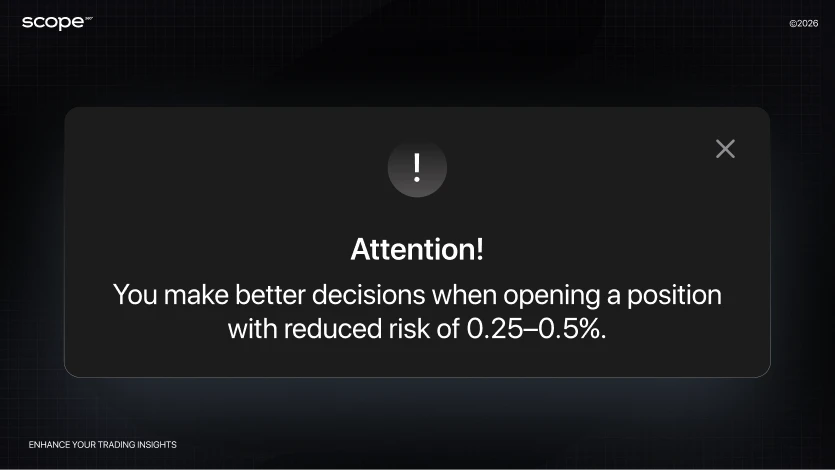
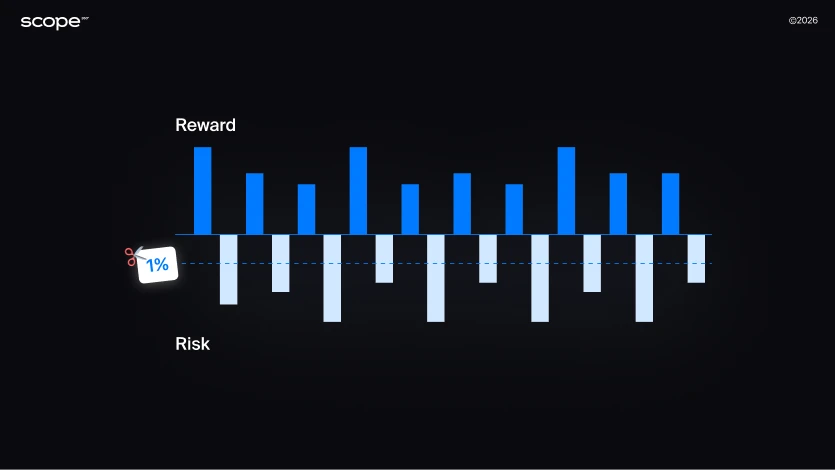
Position Sizing: Follow strict rules on risk per trade (usually 1–2%) and proper stop-loss placement.
3. Show Consistency
Sustainable Profits Over Flashy Wins: Prop firms value traders with stable, moderate profits over a single big win.
Stick to Your Strategy: Avoid changing strategies or making impulsive “chasing losses” trades mid-challenge.
4. Psychological Control & Emotional Management
Emotional Discipline: Stress, overconfidence, and fear are often the root causes of failure.
Structured Trading Habits: Daily routines, predefined risk rules, and boundaries reduce emotional mistakes.
5. Documentation & Transparency
Trade Journaling: Record entries, exits, trade logic, emotional states, and takeaways - it's essential for both analysis and proving consistency.
Evaluation Accountability: Journals serve as evidence that you're trading consciously and not just gambling. Firms may review them to verify your decision-making process.
Summary: Studies show that only about 6% of traders pass prop firm challenges, with 94% failing in the first or second phase. The main reasons for failure are not a lack of experience or strategy flaws - over 80% of participants had prior trading experience — but rather weak risk control (27% admitted to breaching rules), emotional pressure, technical/platform issues (61%), and lack of transparency in prop firm practices (45% reported ambiguous terms, 92% non-market prices).
Key Prop Firm Challenge Requirements:
Task | Firm Requirement |
Reach Profit Target | 8–10% |
Meet Minimum Active Trading Days | 5–10 days of real trading |
Stay Within Drawdown & Daily Loss Limits | 5–10% total, 2–5% daily |
Manage Trade Risk | 1–2% per trade, proper SL & sizing |
Maintain Consistency | Avoid big fluctuations, keep steady results |
Document and Analyze | Transparent trade journaling and self-analysis |
*The information is for informational purposes only and requirements may vary between prop firms.
These requirements make prop firm challenges a test of trader maturity - not just performance. Scope360° provides you with tools to automatically track, analyze, and manage all of this.
How Scope360° Helps Traders Pass Prop Firm Evaluations
To successfully pass a prop company's assessment, it takes more than just profits - structure, discipline, and transparency are also important. Scope360° is a platform that helps traders develop a systematic approach to trading and navigate each stage with understanding and confidence.
Scope360° Features That Drive Results
Automatic Sync
No more manual data entry in Excel. Scope360° connects directly to the broker used by your prop firm, automatically downloading data on trades, commissions, and orders. This feature ensures data accuracy and saves valuable time, which is especially important when you have a limited time frame for evaluation.
Full Analytics Without Spreadsheets
Scope calculates more than 50 indicators - from the win rate and average R-factor to daily drawdowns and PnL. All of this is visualized using clear graphs and tabular reports.
Discipline & Behavior Tracking
The system allows you to set goals, such as “Do not exceed the loss limit for 5 consecutive days,” record your emotional state for each trade, and track rule compliance., record your emotional state for each transaction, and track where the rules are being followed.
Calendar, Dashboards, and Reflection
Scope visualizes your entire trading process:
Shows equity curves by day and week
Stores your trade journal with strategy tags
Lets you leave comments, write notes, and review each step
Ready for Submissions
The platform lets you export sessions and reports in file format
or share via Share Card. Everything is structured and presented the way prop firms expect.
Why This Beats Spreadsheets and Notebooks
Common Challenges for Traders | How Scope360° Solves Them |
Wasting time on manual trade logging | Automatic trade import via API |
Lack of objective insight into trading | Full stats and metrics on key performance areas |
Struggles with discipline and emotion | Goal Tracker and emotional journaling tools |
Inconvenient reporting for prop firms | PDF exports and clean shareable analytics cards |
Scope360° was not designed as “just a diary.” It is a complete platform for organizing your trading process. For traders seeking to pass a prop company assessment, this is not a bonus, but a necessity.
Start with a tool that won't let you down if you are serious about passing the test and succeeding in this field.
Why Scope360° Is Your Best Choice for Prop Trading
For traders aiming to pass evaluations, get funded, and maintain consistent performance - Scope360° is more than just a tool. It’s the foundation of a professional trading workflow. Every feature is built around trading logic and execution control - without the unnecessary manual work.
You reinforce discipline with automated journaling, goal tracking, and structured analysis.
You manage risk trade-by-trade, not in hindsight.
You document your trading in a format that's clear to prop firms - and never lose data.
You build a trading process, not just trade records. That’s what makes you a trader, not an accountant.
Scope360° is a platform designed to help you not just pass a challenge - but grow consistently and trade with structure.
Get started for free today and trade with discipline, structure and real data behind every decision.