Imagine the following experiment:


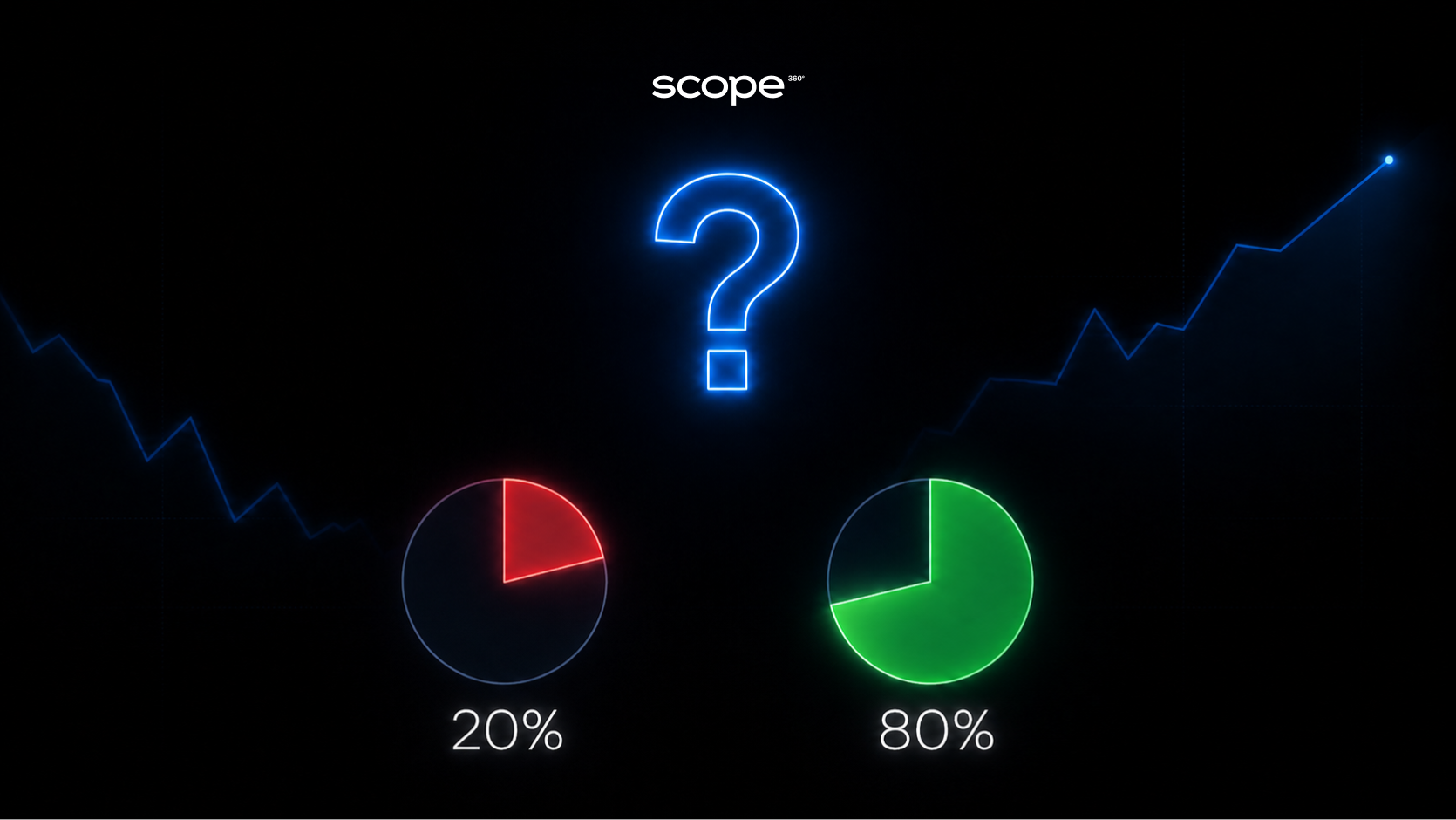
The rat’s task is to guess which button will light up and press it. If it guesses correctly, it is rewarded with food; if not, it receives no reward.
In tasks like this, rats learn fairly quickly to choose only the green button, and a consistent 8 out of 10 is perfectly acceptable to them. People, on the other hand, although they also press the green button more often, still sometimes try to guess and press the red one. Their success rate will be around 68%, even though consistently choosing green would yield a steady 80%. This phenomenon is called probability matching.
In fact, people aren’t always willing to settle for a consistent average result, so they continue to test the low-probability outcome even when a more advantageous, consistent strategy is available—because the possibility of hitting the unlikely outcome makes the reward more attractive in itself, and sometimes may even seem more profitable.
A similar principle underlies learning. Both humans and rats gradually associate a specific action with the probability of receiving a reward: the green button more often yields a positive outcome, so that choice becomes ingrained, while the red button more often proves disadvantageous and, over time, begins to be ignored.
That’s why a series of wrong decisions is an inevitable part of the learning process. They serve as feedback between the actions that produce a result and those that do not.
Mistakes are an essential part of learning.
And it’s up to you to decide what to do with them.